What are those beatboxing techniques? They follow from imitating percussion sounds [drum, snare, cymbal, hi hat] and special effects techniques [keys, twisting, dropping balls].
![percussion sounds [drum, snare, cymbal, hi hat] and special effects techniques [keys, twisting, dropping balls]](img/etiudy-klarnet17.jpg)
If we assume that I'm not a beatboxer [um, tch, psh, tch] but a clarinet player who specializes in performing contemporary music [a fragment of a contemporary piece divided by statements o! Ahh! Mmm! Sss! Ay!] than my imitations may relate to other groups of sounds. I'm starting to use the term 'pretending'! Oh my! But but but! that is directing one's attention differently in the process of creating a piece [arranging sounds and wondering, support your head with your hand and walk and hunker down] and then performing it [ti rim pii pii pii po po po]. What builds it are different physical states, 'interpretation points' through which the arising ideas are interpreted [looking for different points of interaction in the audience because I'm not selfish and I won't look for those points somewhere here, on stage, but there, in the crowd]. The idea concerning the first technique type kick drum. I will present this technique in different sequences of interpretation. Stomping your foot on the floor or the étude number ONE! One as [show picture] one! A great technique in a jump of despair! [a jump to the floor filled with sound].
![I'm not a beatboxer [um, tch, psh, tch] but a clarinet player who specializes in performing contemporary music](img/etiudy-klarnet18.jpg)
What about sequences of techniques? [Twisted face] Those are the propositions of some sort of a new language. Bm – tuk – re re – thu – pf – pf – eeee. The last sound type eeee may be considered the end of the phraaaase, whereas 'bm' its beginning. In the middle there are re re and thu. The initial bm is a kind of overture after which the proper sequence starts, with emphasis on re re. This kind of writing down the conclusions about the placement of a given technique in the course leads to musical skill development. That is the musical sense or maybe something else. The sense should appear after a so called use of a word in respect to a given structure. Here is the structure [o] here am I [o] and here are the words 'musical sense'. Attention, skip, hop, start. Wr- Ek – mu -dis [clarinet], fgfgfgfgfg [clarinet], resolute movement 'go' [one quarter note in the course].
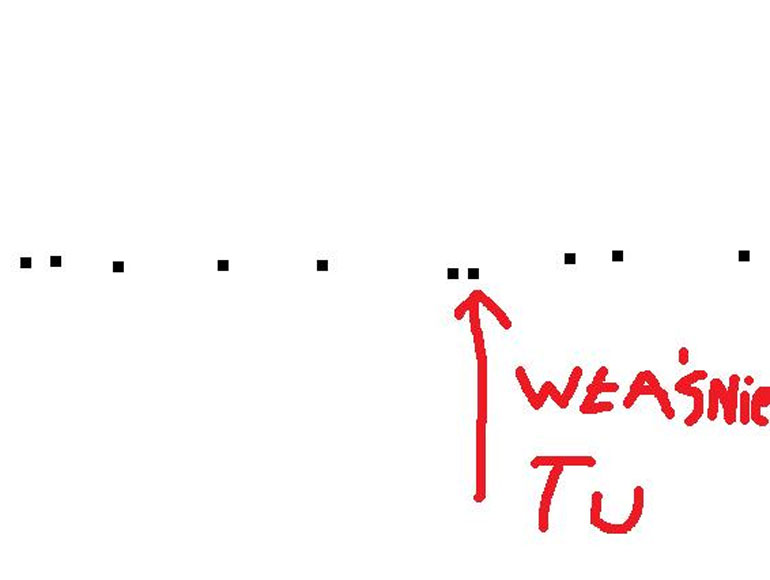
We give meaning and expand. Meaning is a veeeery subjective term. It's about consolidating expression, so it wouldn't be a dry scream (although within our favorite structure the term 'dry scream' may turn out to be useful, used after fgfgfgfgfg [clarinet]. Expanding however, is based here on filling in, writing down a list of possibilities and a constant interpretation through 'meaning'. This is how we add. How we fill in:

Aaaaand maybe one of you can write down your own original technique in an appropriate place within the structure? But before I approach you, I'd like to take this opportunity of approaching and proposing in a beatbox way. Let's write down our possibilities of such an 'approach'. I pick up sheets of paper to be filled in, leaning down, taking it, raising. I've got them!!! YEAH! I come forward and I hand them out. The structure and the sequence of possibilities is just being expanded. We connect it with the above mentioned structure. And so we have what follows: leaning down [an accentuated quarter note] – a silent glissando [c h clarinet] – Wr [speech] – on touching the sheets Ek acutely and dry pronounced sixteen [speech] – 'mu' on rising [speech] – clarinet powerfully played a, total involvement [clarinet] – dis treated as a preparation for the 'I've got them!!! YEAH! [clarinet] – approaching the audience quarter note= 90 – 'go' in short impulses – fgfgfgfgfg thirty second notes played silently but bitterly [clarinet].
Let's make this into an exercise, an étude developing the performance whilst leaning. It has to be written down or you will lose control over this absurd, which has an huge ambition of being a consistent musical structure, composed, however, of non musical elements. I believe that if I describe them in a musical way they will become unity within the piece. This is how it should be practiced.

Arranging beatboxing techniques has its reflection in . in . in . in . in . in the 'square' notation. Playing an instrument is then treated as a realization of midi signals which causes an effect of certain decisiveness in playing a sound. 'There is – I play', 'there isn't – I'm silent'. This is how, in the simplest of ways, which, again, guides us to the preliminary question about the meaning of expressing the primal, basic sound, in which lies the essence of sonorism, deformation and expanded expression. Look at the square! Just play it when it appears. Did you play it? So now another square. And another one. We have three squares. We start the arranging. We can arrange on the floor, in space, in a notation how and send each other propositions of arrangements, which later will be used by me. It's an introduction to a method, which finally will be used in the 'Internet Strange and Wild Festival'. Out of arranging, out of technical puzzle surfaces a method of 'composition-letters', 'guide me', 'natural sampler', 'dimensional puzzles with photos', 'fillings', 'common over interpreting and synthesis'.
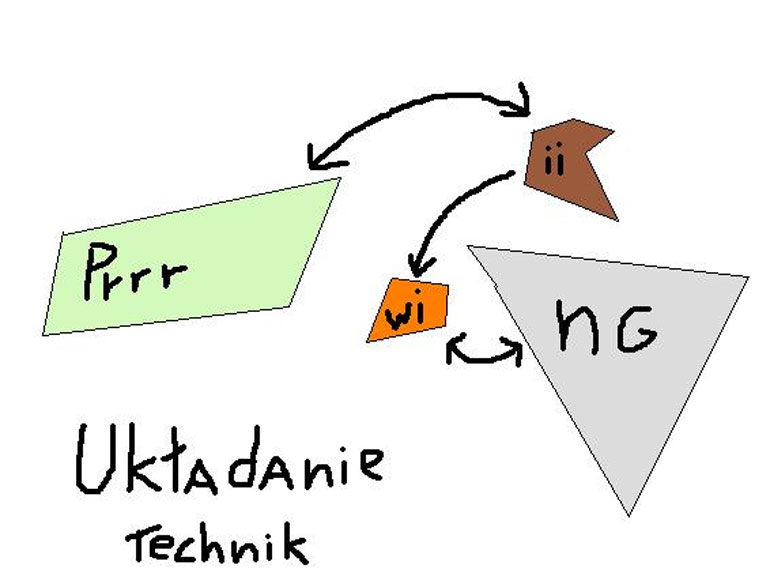
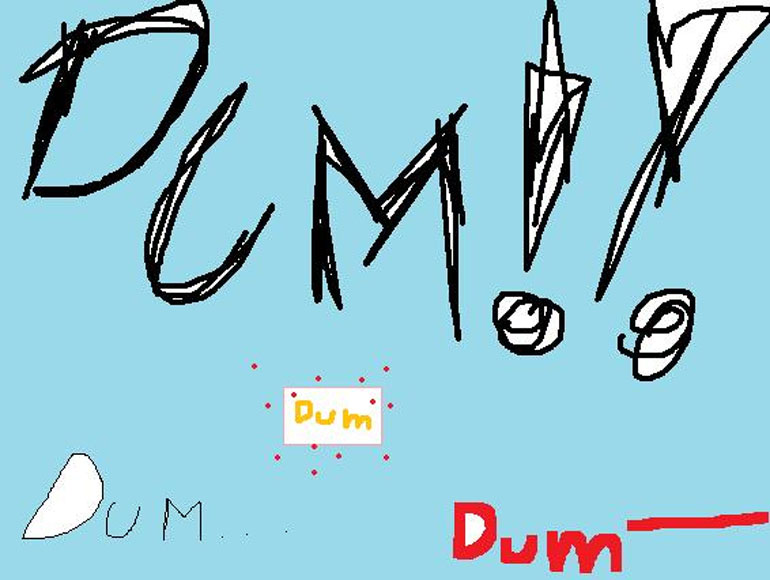
We can imagine how an instrumental technique functions in a classically understood notation. The stave, the signs, the notes, a graphical sign from time to time and expression markers. Each of those elements cannot suggest further elaboration of the sound of techniques. It is because without modulating music with words, like for example the sound a 1 played 'dirty and brutal', not to mention certain styles hat require a specific feel. Terms like 'AC/DC, jungle, Groove, Suffocation, distortion electric guitar, dirty' lead and guide the sound of the technique. Below we have an example of such a transition of a technique 'Dum' through the above mentioned words - inspirations:
Considering my disbelief in the realness of the performer – audience relation, in the études I'm constantly trying to notice it and focus on this special kind of dialogue. It is by all means possible to practice it. It's possible thanks to employing such a notation in which all the remarks regarding the interaction are described musically by all available means. For example approaching the audience in sextolets cut with appropriate notes (here one can practice the instrumental technique while approaching the audience), enunciating the claim cccccccc- an you? Te ll me eeeeeee if the cla cla cla cla rrrr inet can play uuuuuuuuu mmmmmmmmmm iiiiiii low?

Because of my main inspiration, which is contemporary music, I'd like to present a beatboxing technique from the point of view of a prepared instrument. Playing in a different way than it is accepted with the mouthpiece in one's mouth, makes it possible to see the instrument as a set of various possible blows, shouts, smacks, shuffles and clicks. Nothing more similar to beatbox. A whole range of contemporary preparation is very close to beatboxing techniques. Arrangement and the saturation with a certain style of sounds makes it contemporary music. This understanding of the instruments preparation leads only to expanding its possibilities.
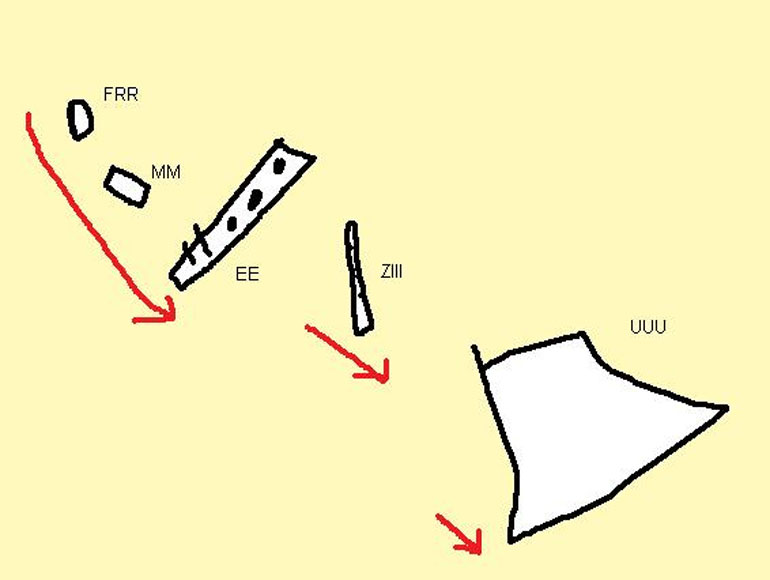
Beatboxers often imitate certain groups of sounds making them sound like percussion. The hip hop, so to say, aesthetics creates the whole show. Without a certain swag, swing, slack, mixing, audience oriented playing, a beatboxer's performance would be dull and flat. Does that mean that contemporary music, so advanced in new sounds, lacks swing and that means it's flat? Of course not. The same way that beatbox seems to be shut within the framework of its message, contemporary music beautifully opens up to absorb some new musical phrases into its dictionary.
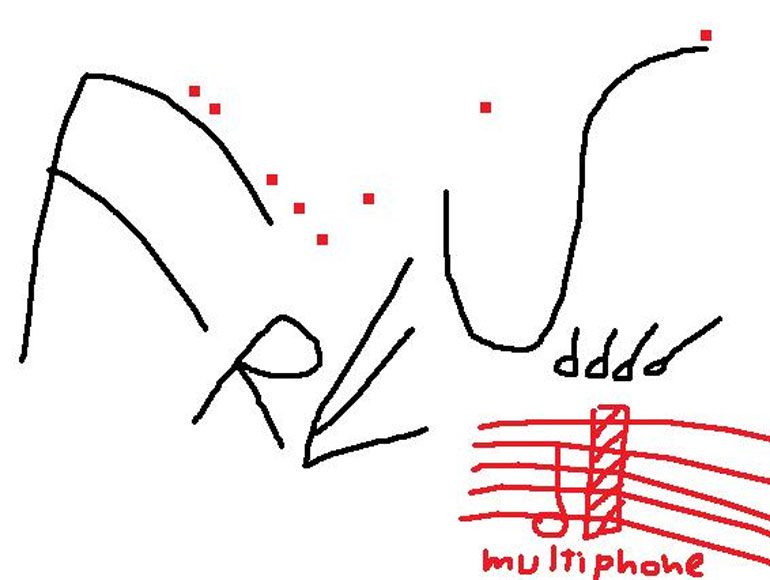
And so I suggest something very tasty that contemporary music can absorb, the bases that are real sound, a kind of atmosphere, that is a real mine of sound possibilities. Here are examples of such sounds and their interpretations within the framework of the synthesis of contemporary language and beatbox.
Now it is time for an important issue that is controlling the technique. Let's take 'ts' for starters. In the beginning we play 'ts' so we can hear it properly. Let's add 'ts' described as a 'train, an ultra fast train under pressure, an ultra fast flying train under pressure'. That is how descriptions modulate the basic technique. Now I'm going to expand on the descriptions as a musically described structure.
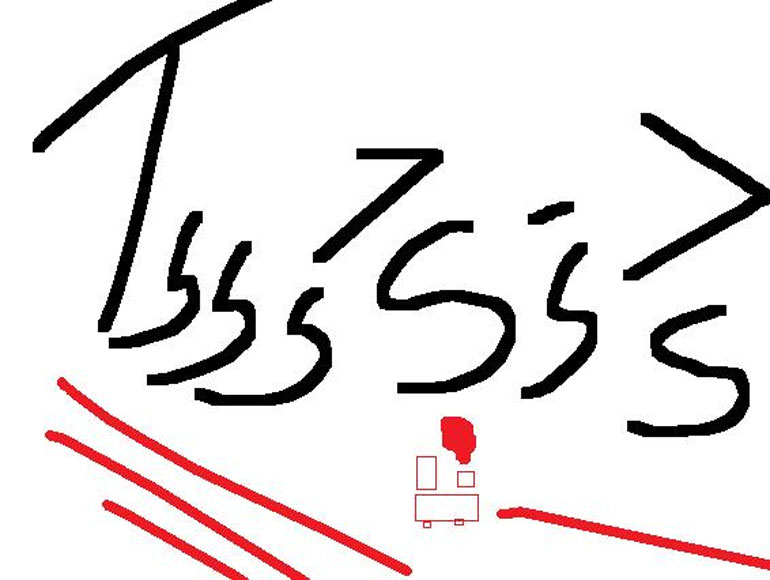
What will happen if we go a lot further in the subject of making the beatbox inspired technique more fluid. We'll create a certain short story into which the technique will be inserted. Here are three stories with one 'psh' technique.
A flock of birds psh pshhhhh shshshshshshshshshshshppppppp flew once upon a time towards the exotic countries. They flew one day, psh, second psh psh and third psh psh psh to finally reach their destination. PSH!

The fight is unnecessary only when PSH PSH PSH PSHA! You can't communicate with your opponent. Listen pshshshshshshshshshshshy let's not fight psh please psh please psh please. NO! FIGHT! PSHY P SH P SHYYYYYY!
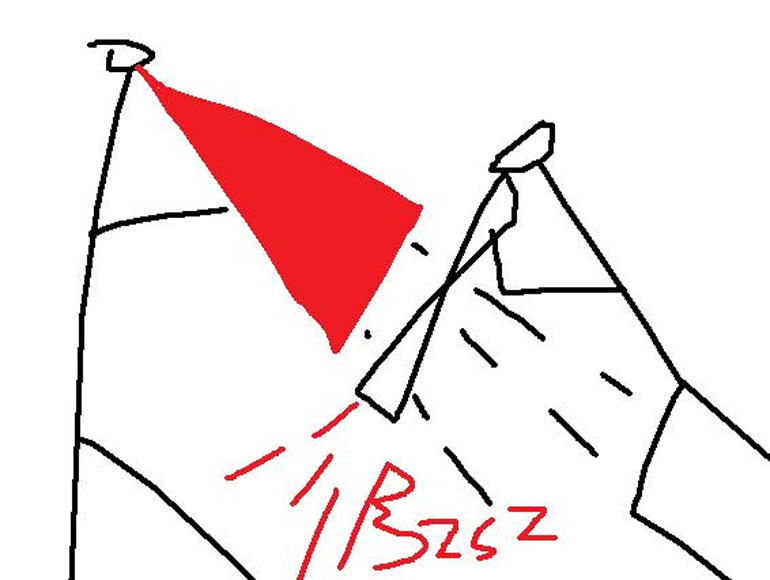
Rolling a ball around the circle pshyyyyyyy pshyyyyyy pshyyyyyy must end one day [quietly pshyk]. One can't after all ha ha ha ha psh ha ha ha ha psh last forever within the circle ppshppshppsh.

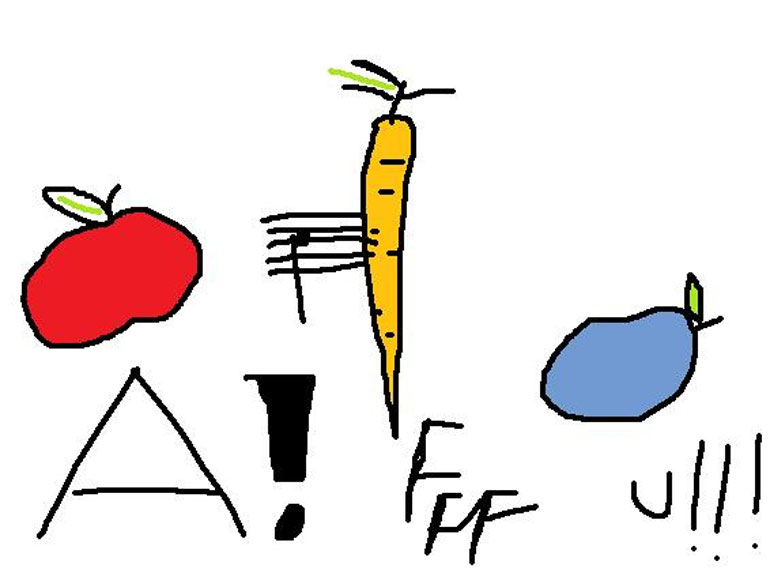
'Screaming at vegetables' is quite a radical ending to this chapter. As we have previously stated, the basic gesture is decisive when it comes to expression. Here, in the case of a wind instrument, the most important is the mechanics of the mouth that is the aperture. In order to play one has to open the mouth in order to put in the mouthpiece to make it vibrate, one also has to breathe in because the lack of oxygen flow will only cause unnecessary tension. A body prepared this way is very similar, with its expression and energy, to a person that's about to scream. Because we have no reason to scream, it is merely a part of the just starting piece, one should discharge what we have just started. Abstract is what perpetuates us so there is no reason not to put four vegetables in front of us towards which we will play and scream at. It is so obvious. Not playing W.A. Mozart but a series of weird co-sounds I feel that it has its verification in the musical language we use.
The development of these „Études” was partially financed by an Artistic Scholarship granted to me by the Bureau of the City of Warsaw.